
Construction Safety 101: The Essential Guide to OSHA Compliance in 2026

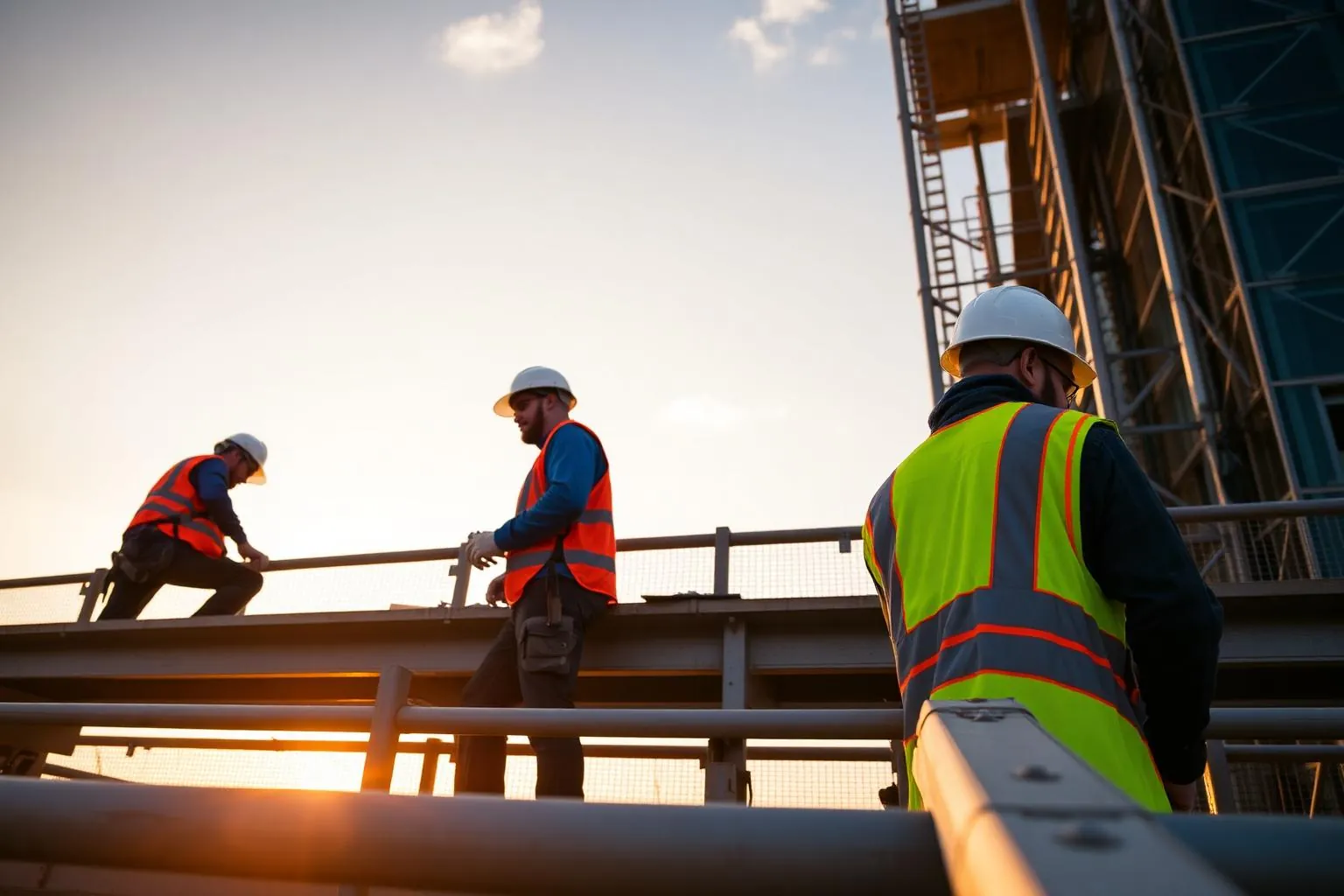
Every year, construction accounts for roughly one in five workplace deaths in the United States. The fatal injury rate in this industry is nearly three times higher than the national average. These aren't just statistics—they represent real people, real families, and preventable tragedies.
Whether you're a seasoned superintendent or a first-day laborer, understanding construction safety isn't optional—it's the single most important part of your job. This guide covers everything you need to know about staying safe and OSHA-compliant on construction sites in 2026.
What Is OSHA and Why Does It Matter?
The Occupational Safety and Health Administration (OSHA) is the federal agency responsible for ensuring safe and healthful working conditions. OSHA sets and enforces standards, provides training and education, and has the authority to inspect workplaces and issue citations and penalties.
For the construction industry, OSHA compliance isn't just about avoiding fines (which can reach $161,323 per willful violation). It's about creating a culture where every worker goes home safely at the end of every shift.
The "Fatal Four": Construction's Biggest Killers
OSHA identifies four hazard categories responsible for over 60% of construction worker deaths. Understanding and mitigating these hazards is the foundation of construction safety:
1. Falls (38.7% of construction deaths)
Falls from heights remain the number-one killer in construction. Common fall scenarios include:
- Falls from scaffolding
- Falls through roof openings or skylights
- Falls from ladders
- Falls from unprotected edges
Prevention measures:
- Install guardrails on all open sides and edges 6 feet or more above a lower level
- Use personal fall arrest systems (harnesses) when guardrails aren't feasible
- Inspect all ladders before use; follow the 4-to-1 rule for placement
- Cover all floor openings with secured covers
- Conduct regular fall protection training
2. Struck-By Incidents (9.4%)
Workers being struck by falling objects, swinging loads, or moving vehicles. Common scenarios include:
- Objects falling from overhead work
- Workers hit by swinging crane loads
- Pedestrian workers struck by construction vehicles
Prevention measures:
- Wear hard hats at all times on active job sites
- Establish exclusion zones around crane operations
- Secure all tools and materials at heights
- Use spotters for heavy equipment operations
- Implement traffic control plans
3. Electrocution (7.3%)
Contact with live electrical components, overhead power lines, or improperly grounded equipment.
Prevention measures:
- Assume all power lines are energized
- Maintain minimum clearance distances from power lines (varies by voltage)
- Use Ground Fault Circuit Interrupters (GFCIs) on all temporary power
- Lock out/tag out electrical systems before working on them
- Never use damaged cords or equipment
4. Caught-In/Between (5.4%)
Workers caught in or compressed by equipment, objects, or collapsing structures. Trench collapses are particularly deadly.
Prevention measures:
- Never enter an unprotected trench deeper than 5 feet
- Use trench boxes, sloping, or shoring for all excavations
- Keep heavy equipment away from trench edges
- Inspect trenches at the start of each shift and after rain
- Never work between a moving and stationary object without clearance
What's New in 2026: OSHA Updates You Need to Know
PPE Fit Requirement (Effective January 2025)
OSHA now explicitly requires that all Personal Protective Equipment must properly fit each individual employee. Employers can no longer rely on a "one-size-fits-most" approach. This means:
- Employers must stock a range of sizes for harnesses, gloves, hard hats, and other PPE
- Women and smaller-statured workers must have access to properly fitting equipment
- PPE that doesn't fit properly is considered a violation
Type II Safety Helmets
While OSHA doesn't yet mandate Type II safety helmets, the industry is rapidly moving toward them. Unlike traditional hard hats that only protect against top impacts, Type II helmets protect against front, side, and rear impacts. Many major contractors now require them on all job sites.
Data-Driven Enforcement
OSHA has shifted toward targeted, data-driven inspections. Rather than random visits, inspectors are focusing on:
- Employers with elevated injury rates
- Companies with prior citations
- Sites that receive worker complaints
- High-hazard operations (trenching, scaffolding, crane use)
Heat Illness Prevention
With increasing attention to heat-related hazards, OSHA is emphasizing heat illness prevention through:
- Mandatory water, rest, and shade protocols
- Heat acclimatization programs for new workers
- Training on recognizing heat stroke and heat exhaustion
- Action plans triggered by heat index thresholds
Building a Culture of Safety
Compliance is the floor, not the ceiling. The safest job sites go beyond checking boxes—they build a genuine culture of safety. Here's how:
Daily Toolbox Talks
Start every shift with a brief safety meeting (toolbox talk) that covers:
- Specific hazards for the day's work
- Required PPE and fall protection
- Emergency procedures
- Weather-related concerns
- Lessons learned from recent incidents
Job Hazard Analysis (JHA)
Before beginning any new task, conduct a Job Hazard Analysis that identifies:
- Each step of the task
- Potential hazards at each step
- Control measures for each hazard
Near-Miss Reporting
Encourage workers to report near-misses without fear of retaliation. Near-misses are free lessons—every one that gets reported and addressed is a potential fatality prevented.
Worker Participation
The best safety programs actively involve workers in:
- Developing safety procedures
- Conducting workplace inspections
- Investigating incidents
- Mentoring new employees on safe practices
OSHA explicitly states that workers should be encouraged to report hazards without fear of retaliation. A workplace where employees are afraid to speak up is a dangerous workplace.
Essential Safety Certifications
| Certification | Who Needs It | Duration | Cost | |--------------|-------------|----------|------| | OSHA 10-Hour | All construction workers | 2 days | $25–$80 | | OSHA 30-Hour | Supervisors, foremen | 4–5 days | $60–$190 | | First Aid/CPR | Recommended for all | 1 day | $80–$120 | | Confined Space Entry | Workers in tanks, vaults, etc. | 1 day | $150–$300 | | Fall Protection Competent Person | Supervisors managing height work | 1–2 days | $200–$400 | | Scaffold Competent Person | Supervisors managing scaffolding | 1–2 days | $200–$400 | | Excavation Competent Person | Supervisors managing trenching | 1 day | $150–$300 |
Your Safety Checklist
Use this daily checklist to stay safe on the job:
- ☐ Attend the morning toolbox talk/safety briefing
- ☐ Inspect all PPE before use (hard hat, harness, gloves, boots, glasses)
- ☐ Verify fall protection is in place for any work above 6 feet
- ☐ Check that all power tools and cords are in good condition
- ☐ Confirm trenches have proper protection (if applicable)
- ☐ Know the location of first aid kits and fire extinguishers
- ☐ Identify emergency exits and assembly points
- ☐ Stay hydrated—especially in hot weather
- ☐ Report any hazards or near-misses immediately
- ☐ Never bypass safety devices or take shortcuts
Free OSHA Resources
OSHA offers several free resources that every construction professional should know about:
- On-Site Consultation Program: Free, confidential safety assessments for small and medium businesses—no citations or penalties.
- OSHA.gov: Standards, guidance documents, fact sheets, and training materials.
- OSHA Training Institute: Courses available across the country.
- eTools: Interactive web-based training on specific hazards (fall protection, scaffolding, excavation, etc.).
The Bottom Line
Construction will always involve inherent risks, but those risks can be managed, minimized, and controlled. By understanding the Fatal Four, staying current with OSHA requirements, and building a genuine culture of safety, every worker and employer can help ensure that everyone goes home safely.
Safety isn't a burden—it's a professional responsibility and a moral obligation.
Looking for construction opportunities with companies that prioritize safety? Download the TODO Careers app to connect with employers who value their workers.
15 years in the construction industry, helping contractors and skilled workers connect with confidence.